Monday edition
November 23, 2026
CANADA — NOVA SCOTIA / ESTABLISHED TRAINING EXAMPLE
From simulator to the woods: how two colleges train equipment operators
Nova Scotia Community College and New Brunswick Community College combine theory, simulator practice and field experience in their Mechanized Forest Equipment Operator program. NSCC’s account describes WestFor Management’s role in shaping training around the need for operators of harvesters and forwarders.
The progression moves learners from practice with machine controls into real forest terrain, where tree selection and changing ground add decisions that a simulator alone cannot reproduce. Participant Logan Gray, who already had excavator experience, described discovering how much terrain and tree differences matter. For instructors, the established program offers an example of sequencing practice and working with an employer to define the job. The college’s account does not establish current enrollment availability or a verified placement rate.
NSCC: partnership, training sequence and participants’ experience →
By the Numbers
Latest available observations as of 2026-11-23. Dates and comparison periods vary by series; monthly figures remain unchanged between releases.
| Indicator | Latest | Change |
|---|---|---|
| U.S. on-highway dieselEIA U.S. on-highway diesel; taxes included | US$5.94/galWeek of November 16, 2026; released November 17 | −US$0.19/gal −3.1%Versus November 9: US$6.13/gal |
| Lumber futuresJanuary 2027 lumber futures (CME LBRF27) | US$537.00/MBFNovember 20, 2026 settlement | UnavailableNovember 13 January settlement not independently verified; checked November 23 |
| Madison’s lumber indexMadison’s weekly lumber index | US$440.00/MBFWeek ending November 20, 2026 | −US$4.00/MBF −0.9% (calculated)Versus week ending November 13: US$444.00/MBF |
| Hardwood lumber PPIBLS WPU0812; 1982=100; not seasonally adjusted | 284.3 index pointsOctober 2026; released November 13 | −1.3 points −0.4%Versus September 2026: 285.6 |
| U.S. single-family housing startsCensus U.S. single-family starts; annualized estimate | 864,000 units (SAAR)October 2026; released November 18 | +33,000 units (SAAR) +4.0%Versus revised September 2026: 831,000 |
| Canadian dollarBank of Canada; Canadian dollars per U.S. dollar | C$1.43 per US$1.00Daily average, November 20, 2026 | +C$0.00 per US$1.00 +0.1%Versus November 19: C$1.43 per US$1.00 |
About these numbers
Housing starts are annualized estimates, not actual monthly units, and are subject to revision. The hardwood PPI is an index, not a dollar price. Exchange rates are daily averages. MBF means thousand board feet. The October single-family starts monthly change has a published ±9.0-percentage-point 90.0% confidence interval and is not statistically significant. The January settlement comes from the named-contract table. Its November 13 same-contract comparison could not be independently confirmed on November 23; the continuous historical series is not substituted. The latest EIA diesel observation is November 16, with the next release scheduled November 24. Display rounding follows the approved format. Changes are calculated from unrounded observations, so rounded currency levels may look unchanged even when a small movement occurred.
Sources:
EIA U.S. on-highway diesel; taxes included
Investing.com January contract settlement
CME delivery calendar
Madison’s November 20 index
BLS hardwood lumber PPI via FRED
Census U.S. single-family starts; annualized estimate
Bank of Canada daily averages
Operations & Costs
Woods to Wheels puts forestry fuel costs in focus
The Forest Business School’s Woods to Wheels: Every Gallon Counts brings together U.S. and Canadian research on timber-harvesting and log-trucking fuel use, with linked studies and practical calculators. Its workbench separates in-woods fuel and production from first-haul distance, payload, fuel economy and empty travel.
For an instructor-led exercise, students can change diesel price, calculate harvesting fuel cost per green short ton from the stated fuel rate, and compare it with the haul calculator’s cost per delivered green short ton. Keep U.S. gallons, green short tons and each activity boundary explicit. Historical examples and modeled assumptions need local fuel, production, payload and route records before they describe an actual operation; changing price alone does not estimate current-year fuel consumption.
Explore Woods to Wheels: Every Gallon Counts · Underlying harvesting research: Auburn thesis (2015)
Action Detector
U.S. — OHIO / WEST VIRGINIA AREA / LISTED THROUGH DECEMBER 17
Natco internship combines cruising, marking and mapping
Natco Forestry Services’ Field Technician internship is listed in Calvin University’s career portal through December 17. Posted November 16, the employer-authored notice identifies the Belpre/Parkersburg service area and work in point-sample cruising, timber marking, management-plan design, mapping and cruise software.
The listing requires a valid driver’s license, reliable transportation and the ability to work outdoors across varied terrain. Training is provided as needed; pay depends on skills and experience. The page links its application route and gives 740-401-0866 for questions. Students should confirm timing and any school-specific requirements with the employer rather than assuming the listing establishes eligibility for a particular program.
Publications & Tools
U.S. — CLASSROOM AND FIELD / AVAILABLE TEACHING RESOURCE
A paired tree-measurement exercise makes discrepancies visible
Penn State’s Forest Measurements lesson puts students in pairs to compare diameter-tape readings with Biltmore-stick estimates. Activity 3 records tree species, diameter, merchantable logs and estimated board feet on a printable tally sheet, then has teams discuss differences in their results.
Written for grades 10–12, the available lesson can inform an introductory college field lab. A useful check before students use calculated volumes is to remeasure discrepancies between the two diameter readings. The exercise connects measurement technique with the timber quantities used by landowners, foresters and buyers. It is an existing lesson, not a newly published curriculum.
Penn State: Forest Measurements, including Activity 3 → · Printable Activity 3 tally sheet →
Under the Radar
U.S. — OREGON / NOVEMBER 20 BID RESULTS
Two Overdrive bids finish $84,011.76 apart
Oregon’s Department of Forestry lists Stimson Lumber first for the November 20 Overdrive sale at US$5,096,168.22, followed by Hampton Tree Farms at US$5,012,156.46. The difference is US$84,011.76. The schedule identifies the Tillamook County sale at 10,753 MBF, with an appraisal of US$4,526,696.10; the first-ranked bid is 12.6% higher, calculated from those figures.
This is the result for one timber offering. Bid rank does not establish that a contract has been signed, and the comparison does not establish a broader stumpage-price trend.
ODF: current sale results and bidder ranks → · November schedule: location, volume and appraisal →
Today's Featured Resource
Continuous Improvement in Logging
This book applies the Theory of Constraints to finding and managing bottlenecks in logging operations. It combines a five-step improvement process, throughput accounting and productivity references to help operators focus changes where they affect overall output.
Today’s edition is sponsored by
| ||
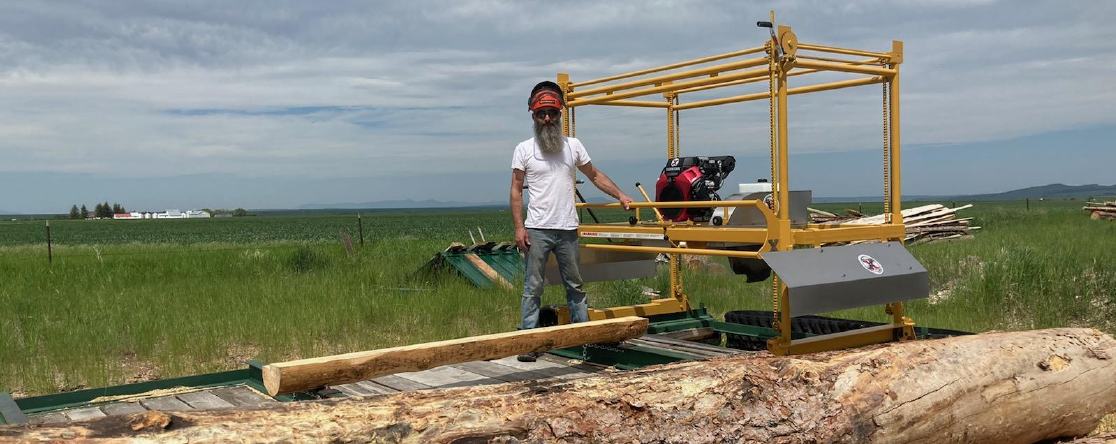 | ||
From log to lumber |

| Explore the sawmill → |
Useful enough to pass along?
Share today’s edition with a colleague.
Publish a newsletter? Get a ready-to-paste Woods Run blurb →